Back in the day when all I thought about was snowboarding and powder turns I lived in a little, crusty town called Skykomish, near Stevens Pass. One of the few people I was lucky enough to know was
Russ Rickets. Russ was the guy looking for endless days of riding big mountains and deep powder. Following Russ on a powder day was pure addrenalin, I remeber looking back on a line and saying, "can't believe we just dropped that cliff." My first experiance working in Alaska was by encoragement from Russ to spend the summer at a cannery, packing salmon. He also taught me how to rock climb. Needless to say he was a huge inpiration and in my mind, he's a legend. Russ is still ripping and taking a more zen like path these days of snorkeling rivers and being a dad. Here's his story.
 Back in the day all we thought about was snowboarding and
how we would pay for that next PBR or lift ticket. When did you make the cross over to
fishing? Have you always fished?
Back in the day all we thought about was snowboarding and
how we would pay for that next PBR or lift ticket. When did you make the cross over to
fishing? Have you always fished?
Yeah, I always fished growing up, that is until I worked in
an Alaskan salmon cannery for a decade. My job was to jump into the holds of
the tenders and push salmon to the fish vacuum. On a good day we would do a
million pounds of fish and I would see all of them. I quit keeping fish after
that era. I wondered if salmon become a world superpower if I would be brought to
trial for my part in the systematic consumption of millions of innocent sockeye…
I just needed seasonal work, who knew?
For the record: ‘Not Guilty’ your honor.
What are the
similarities for you in the sport of fishing and snowboarding?
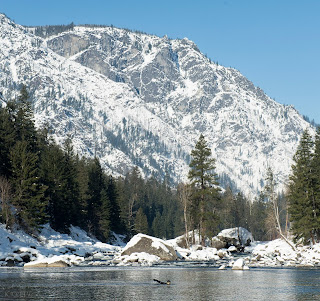
Baggy pants, expensive equipment. Just kidding.
Both require a necessary understanding of conditions and eye for the
good line. A master caster knows the magical combination of weather, water and
the terrain and can walk out the front door and know where to go on any given
day. Fishing is the strangest of
pursuits. It’s like hunting, but you can’t see your prey. It’s like you would say” I think there’s a likely
spot for a buck right behind that boulder”… blam!... miss.
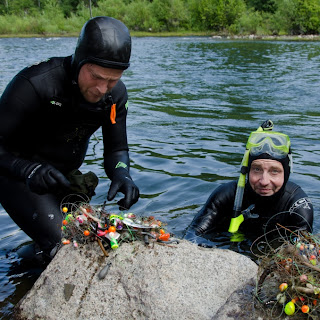
Snorkeling with the
salmon is incredible. You see just how bad of a fisherman you really are.
There’s a lot of fish down there. Many species all side by side, living
together in a complete ecosystem that nobody bothers to explore. I shot a video
of a Chinook, Steelhead and Whitefish in the same little seam, all shoulder to
shoulder once.
You do a lot of
snorkeling these days in rivers, filming fish, what is the draw?
A friend who works as a fisheries
biologist turned me on to this snorkel thing.
We swam with a school of large Chinook and I was hooked. We’re not out
there splashing and kicking like some idiot. Think spearfishing with a camera
and you get the picture. It’s all about stealth, a lot of patience and a
relaxed, centered mind. We’re snipers, not door kickers. We don’t chase fish
and we don’t harass them during the spawn either. These days I usually just watch them from a
concealed location and then dive down and place a camera in a good spot on the
bottom. I then leave the area to let them come back in. The fish are usually
back in the area within a minute or so. They want to be in the best spots. My
Gopro camera is painted camo green and sits on a custom built sandbag that
anchors it to the bottom in strong current. It’s the only way to capture real,
natural fish behavior. You never know what you really caught on film until you
get back to the laptop. A lot of times
we just go swimming; playing in the rapids and deep green pools or swim for
miles on end. When you row a boat down a
river you are only using the top 12 inches of the water column. When you
snorkel you realize that water is a 3D environment somewhat similar to air
currents in the mountains. I can read
what the water is doing by looking at the rocks and sand on the bottom. The bigger the rocks, the faster the
water. We will be deep down and reach
behind a big rock and literally grab the eddy. Sometimes the eddy is occupied
by a large fish that’s every bit surprised as you! I’ve come face to face with
some really big fish and it’s an incredible thrill to share the river with
them.
Anything else you
would like to add?
There is no
governing body for river snorkeling, no rules, no clubs, no nothing. It’s up to
you to learn the ways of water. A rescue is unlikely if you swim solo. They
will find you with a big treble hook if you get in a bad way. Swim with your
eyes open and your ego in check. Scout
what is both above and below the areas you want to explore. Pools and drifts
are usually followed by rapids and rapids are a very dangerous place for
swimming. Just get out and walk around
them. It makes sense. Yes, sometimes we swim rapids sometimes, but we wait all
year for the water to be safe to do so.
Who says it’s safe? Nobody, use
your group’s best judgement. A
refreshing change from a world of legislation, warning signs and control. You
like to fish? You may like snorkeling with your fish. There’s a whole world down there and nobody
is exploring it. Get out and explore your local rivers.
What’s your favorite
snowboard ? I prefer the classics, as I’m riding a Glissade 161 from 2004.
It’s still a great board. I’m fat and
middle aged, so I only ride powder these days.


